Do You Have to Initial Every Page of a Contract?
Usually not. One signature normally binds the whole document, and initials are a precaution rather than a validity requirement — but there are places where you will be asked anyway.
Usually not. One signature at the end normally binds the whole document, and initialling each page is a precaution rather than a condition of the contract being valid. If you signed a twelve-page agreement and initialled nothing, you are in almost every case bound by all twelve pages.
"Almost every case" is doing some work in that sentence, and this guide is about where it stops being true — the documents that carry extra formalities, the industries that ask for initials as a matter of habit, and the situations where a missing initial genuinely causes a problem even though the law does not require one.
Contract rules vary by country and by the kind of document. What follows is general information rather than legal advice, and for anything with real money or a property attached, ask someone who knows the law where you are.
What initialling a page actually means
An initial is a short mark — usually two or three letters — placed on a page to show you saw that page. It is not a second signature, and it is not doing the same job as the signature at the end.
The difference between initials and a signature
A signature executes the document: it is the act that says "I agree to this and intend to be bound." Initials acknowledge a page: "this sheet was in the bundle, and I saw it."
The distinction matters less legally than you might expect, because in most systems what makes a mark count is intent rather than form. In the United States, the Uniform Commercial Code defines "signed" as including "using any symbol executed or adopted with present intention to adopt or accept a writing". Initials adopted with that intention can therefore amount to a signature — which is why "initials are legally meaningless" is wrong, even though it circulates widely.
The federal e-signature statute takes the same approach, defining an electronic signature as "an electronic sound, symbol, or process… executed or adopted by a person with the intent to sign the record". Again: intent, not shape.
Other systems define it in similarly open terms. eIDAS defines an electronic signature simply as data "used by the signatory to sign", and Canadian federal law as "one or more letters, characters, numbers or other symbols in digital form" associated with the document.
So what are initials evidence of?
Not agreement to the contract — the signature covers that. Initials are evidence that a specific page was present in the version you saw. That is a narrow thing, and it is the whole point of the practice.
Why people are asked to initial every page
Four reasons, and none of them is that the law demands it.
Page substitution. The original worry. If a contract is a loose stack of paper held by a staple, someone could in principle swap page 6 after signing and nobody could prove it. An initial on every page makes that much harder. This reasoning made a lot of sense in 1985 and considerably less for a PDF that carries its own integrity signals.
Proving a particular clause was read. A separate initial next to a specific clause — an exclusion, an arbitration term, a penalty — makes it awkward to claim later that it went unnoticed. Some systems treat certain onerous terms as requiring specific acknowledgement, which is where this habit comes from.
Marking changes. If a figure is crossed out and rewritten by hand, initials beside the change show both parties agreed to it rather than one side editing afterwards. This is the one case where initialling does real work and is genuinely worth insisting on.
Institutional habit. Property, lending and insurance paperwork often comes pre-marked with initial boxes because the institution's process requires them, not because a statute does. If a lender will not process the file without initials, the initials are effectively required — just not by law.
When initialling is genuinely expected
Hand-written amendments. Anything altered on the face of the document after it was printed. Initial it, both sides, every copy.
Schedules, annexures and exhibits. Attachments that are physically separate from the body are the easiest thing to swap or lose, so they are the most reasonable place to ask.
Where the document says so. Some contracts contain their own execution instructions. If it says each page shall be initialled, do it — that is a term you are agreeing to.
Where the receiving institution requires it. A registry, lender or insurer can make initials a processing condition. Arguing that the law does not require them will not get the file through.
Does a missing initial invalidate the contract?
Generally no. If you signed the document and intended to be bound, a page without your initials does not usually undo that. The signature is the operative act.
What a missing initial can do is make a dispute messier. If you later claim page 6 is not the page you saw, initials on pages 1 to 5 and not on 6 is a fact someone will point at. That is an evidential problem rather than a validity one — which, incidentally, is the same distinction that applies to signature images generally: a mark can be perfectly valid and still be harder to prove than a stronger alternative.
Initials alone, with no signature anywhere, is a different matter. It can still bind if the intent is clear — the definitions above are broad enough — but you are relying on an argument rather than a formality. If you mean to be bound, sign.
The real exceptions are about formalities, not initials
The documents where you can genuinely get it wrong are the ones carrying extra requirements, and those requirements are almost never about initialling.
In England and Wales, a deed executed by an individual is valid only if "it is signed by him in the presence of a witness who attests the signature". That is a witnessing requirement, not an initialling one, and the two get confused constantly. The UK Law Commission has confirmed that the witness must be physically present even when both parties sign electronically.
A contract for the sale of land in the same jurisdiction must be signed by or on behalf of each party — note the word is signed, not initialled.
Wills, powers of attorney, property transfers and similar instruments carry their own formalities almost everywhere, and those are exactly the documents not to take general guidance on.
How the habit differs around the world
Initialling every page is a custom, and customs are local.
It is strongest in United States real-estate practice, where multi-page disclosure packets often arrive with an initial box on every sheet. That is industry convention — nothing in US contract law requires it, and the UCC definition above points the other way.
In France and the Netherlands, initialling each page (the paraphe) is a long-standing habit in commercial documents. It is customary and evidentially useful, not a condition of validity.
Across common-law systems generally, the position is consistent: one signature, given with intent, binds the document it is attached to.
The rule of thumb that travels: if you are asked, do it; if you are not, your signature is still doing the work.
How to initial a multi-page document without printing it
The practical problem, once you accept you are going to be asked: forty pages, each needing the same small mark, and no printer.
Make the initials once and reuse them.
Create them. Draw your initials with a mouse, trackpad or finger, or type them and pick a handwriting style. Two or three letters is all this needs.
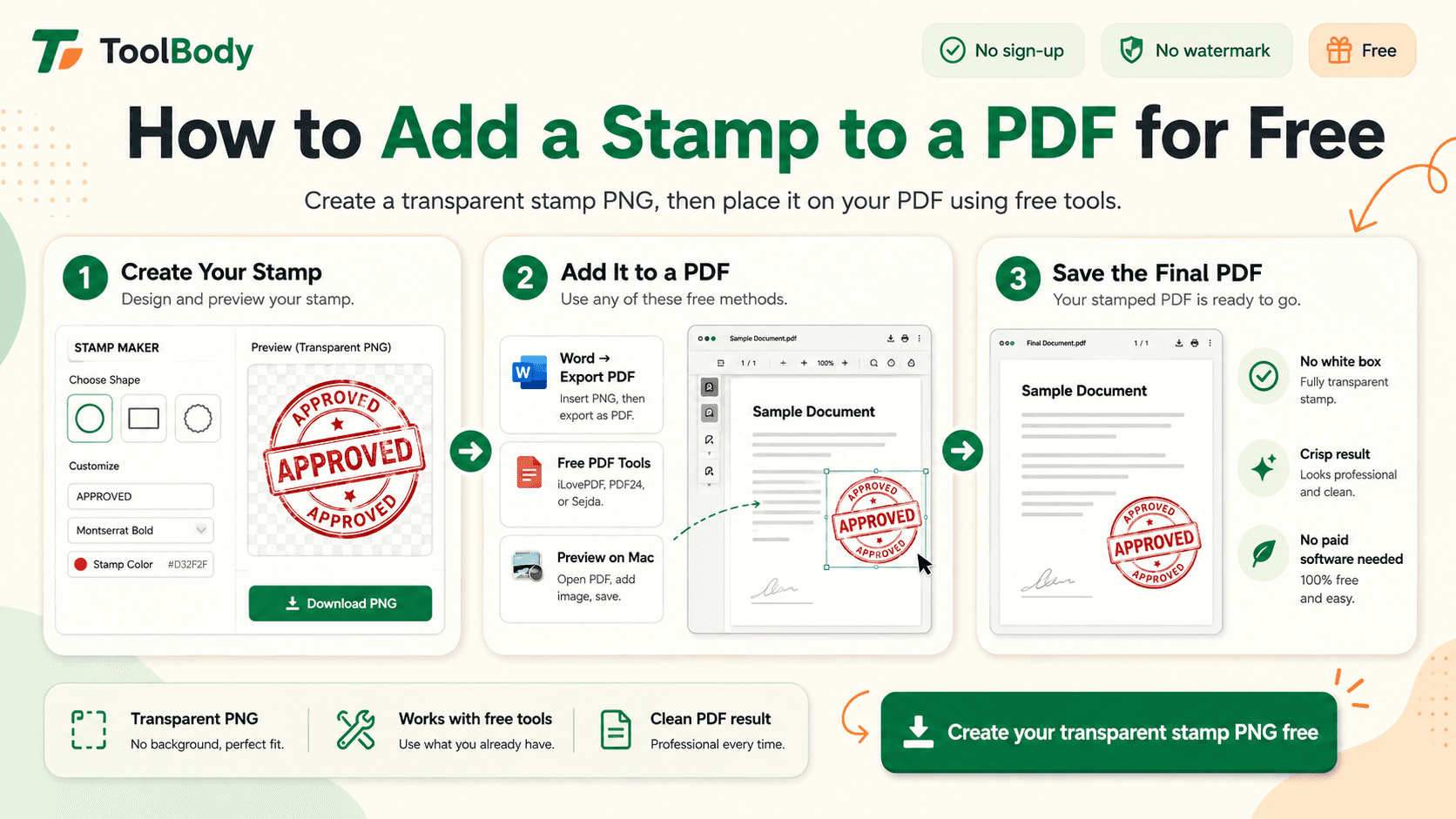
Download as a transparent PNG. This is the part that matters. A screenshot or a scan carries a white rectangle that sits on the page like a sticker; a transparent PNG drops onto the paper cleanly.
Place them on each page. Any PDF reader that lets you add an image will do. Put them in the same position on every page — usually bottom right — so the document looks deliberate rather than assembled.
Keep them consistent with your signature. If your signature is a legible "A Shahzad", initials reading "AS" in a similar hand look right. Wildly different styles invite the question of whether the same person made both marks.
The free signature maker does the first two steps in the browser — draw or type, download a transparent PNG, nothing uploaded anywhere. The same tool makes initials as easily as a full signature, because as far as it is concerned they are the same thing: a few letters, drawn or typed, exported cleanly.
The mechanics of making the mark itself — drawing or typing it, and why the file needs to be transparent — are covered in the guide to making a transparent signature.
Mistakes worth avoiding
Initialling a page you have not read. The entire purpose of the mark is to say you saw it. Putting it on a page you skipped is the one thing that can genuinely be used against you.
Initialling a change you did not agree to. An initial next to a hand-written amendment is agreement to that amendment. Read it before you mark it.
Leaving blank space above your initials. A gap that text could later be inserted into, immediately above your acknowledgement, is worth striking through.
Using initials where a signature was asked for. If the signature block says signature, sign it. Initials in a signature block is the one place the distinction actually bites.
Inconsistent marks. Different initials on different pages of the same document is a gift to anyone arguing about which pages you saw.
The short version
One signature normally binds the whole contract, and initialling each page is a precaution rather than a requirement. It earns its place on hand-written changes, on separate annexures, and wherever the document or the institution asks for it. When you are asked, the fastest route is to make the initials once as a transparent image and place them on every page — and to read each page before you do.
FAQs
Usually not. One signature normally binds the whole document, and initialling each page is a precaution rather than a condition of validity. The exceptions are where the contract itself says pages must be initialled, where a lender, registry or insurer requires it to process the file, and beside hand-written changes — which should always be initialled by both parties.
Generally yes, provided you signed it and intended to be bound. The signature is the operative act. Missing initials do not usually undo that, but they can make a later dispute messier: if you initialled five pages and not the sixth, and you then argue the sixth was substituted, that gap is something the other side will point at.
They can. Most systems define a signature by intent rather than by shape. The US Uniform Commercial Code treats "signed" as including any symbol adopted with present intention to accept a writing, and the federal e-signature statute defines an electronic signature as a symbol or process adopted with intent to sign. So initials given with that intent can bind — though they are normally used as page-level acknowledgement rather than as execution.
A signature executes the document: it says you agree to it and mean to be bound. Initials acknowledge one page: they say that sheet was in the bundle and you saw it. In practice the legal line is blurrier than that, because intent is what counts, but the roles are different and signature blocks should always get a signature.
Sometimes, but do not choose to. If a document gives you a signature block, sign it. Initials can amount to a signature where the intent is clear, but you would be relying on an argument rather than a formality, and some institutions will reject the document on sight regardless of the legal position.
Yes, and this is the one place initialling genuinely earns its keep. A figure crossed out and rewritten, with both parties' initials beside it, shows the change was agreed rather than made afterwards by one side. Do it on every copy, not just yours.
In most places, yes, on the same basis that electronic signatures are accepted. Make the initials once, save them as a transparent PNG, and place them on each page with any PDF reader that allows images. A transparent file matters here: a screenshot brings a white rectangle that sits on the page like a sticker.
Usually nothing. The contract stands on your signature. If the document or the receiving institution required initials, you may be asked to re-execute or to initial the missing page, which is an administrative inconvenience rather than a legal problem. Do not add initials to an old page later without telling the other side.
There is no need. The signature on the final page already covers the document, and adding initials beside it changes nothing. If the page carries an initial box because every page does, filling it in is harmless.